

South Crofty, a historic underground tin mine in Cornwall, UK, is being redeveloped by Cornish Metals. To validate the restart plan, which includes shaft rehab, developing underground infrastructure, and a phased ramp-up, Tomahee and Amalgama used MineTwin to simulate the full development timeline. This approach helped identify hidden bottlenecks and ensured the plan was operationally feasible before execution.
Challenge
The original restart plan was built using static scheduling tools, which lacked realism. Equipment interactions, queuing, and operational variability were not captured. Management was uncertain around feasibility of ore and waste targets, surface handling capacity, equipment purchases and level-specific equipment placement during the start-up periods.
Objectives
- Validate Mine Restart Plan: Assess the feasibility of South Crofty’s ramp-up and full production strategy using dynamic simulation instead of relying solely on static schedules.
- Identify Operational Constraints: Detect and quantify system bottlenecks (e.g., loader and surface truck limitations) that could impact production targets across multiple years.
- Optimize Fleet size and allocation: Use sensitivity analysis and fleet sizing tools to recommend improvements in loader and truck allocation, especially during ramp up period, and surface handling infrastructure.
Why MineTwin
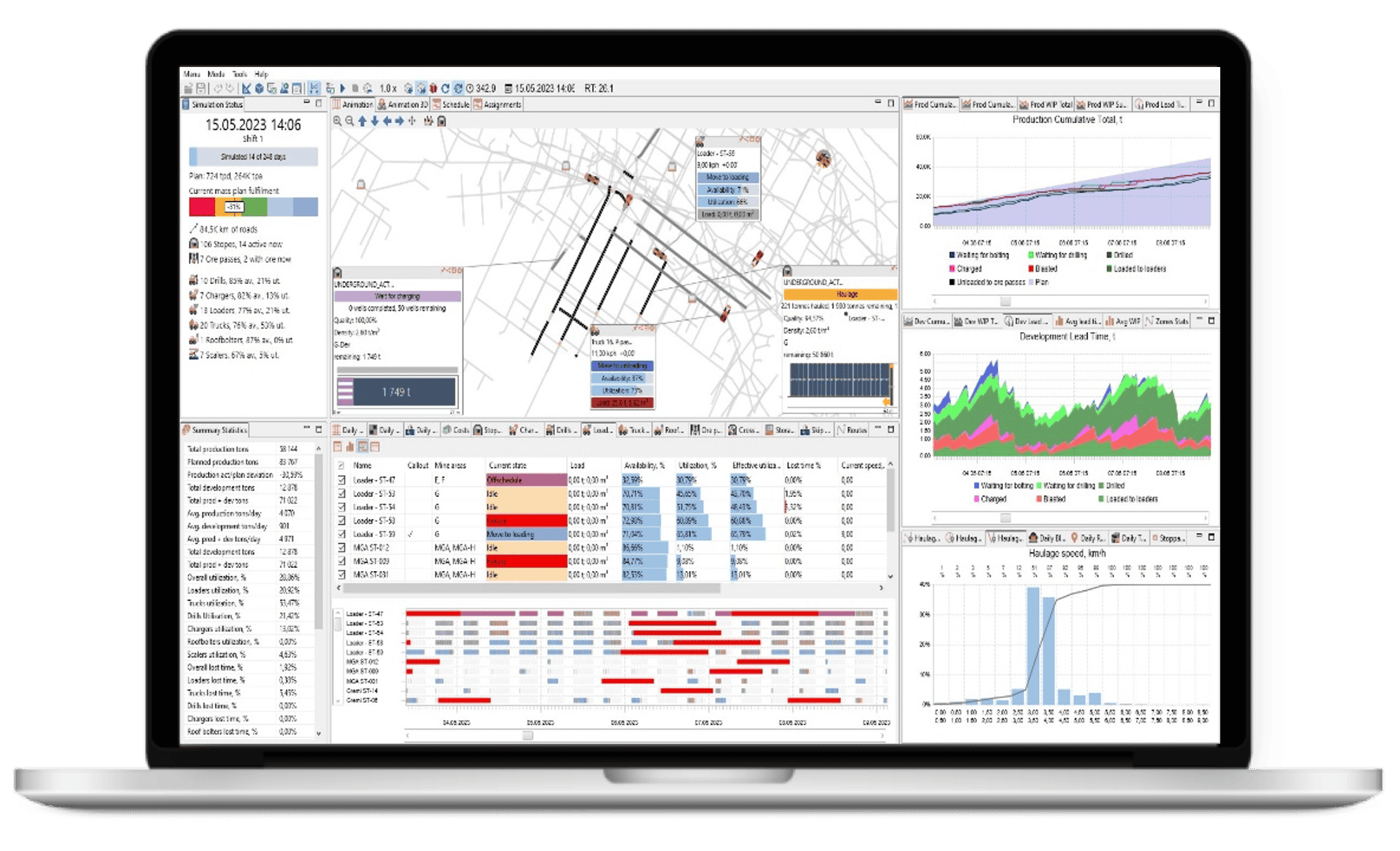
MineTwin is a simulation tool designed specifically for mining operations. It allows detailed simulation of truck–loader interactions, queuing, haulage delays, and stoppages.
It supports fast, flexible testing of fleet and scheduling scenarios, helping mine planners and top management make informed decisions based on realistic operational behavior.
Solution
Developed a MineTwin simulation model based on:
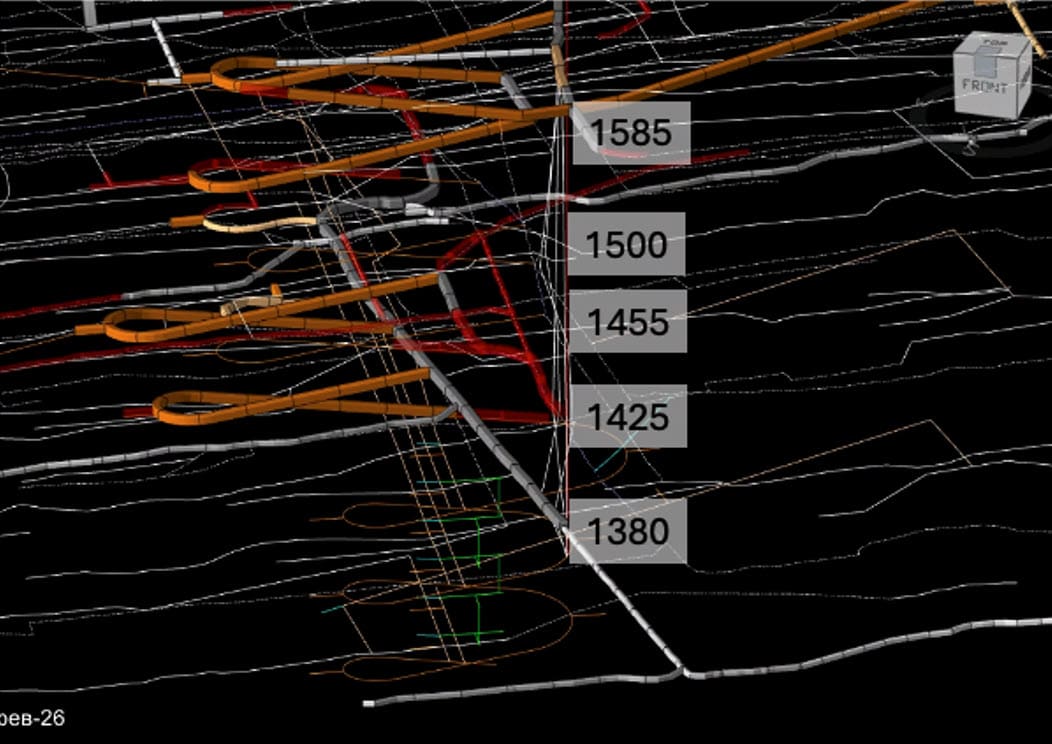
- Full mine layout (stopes, roads, ore passes, crushers, etc.)
- Production schedules and equipment specifications (loaders, horizontal and vertical drills, trucks, chargers, etc.)
- Shift and blasting schedules
We imported Deswik designs and validated the logic with mining experts. Simulated the timeline from start of development to year 5 of production. We included all development and production activities.
Analysis of Surface Operations
Simulation of surface operations at South Crofty revealed that the planned configuration could not meet daily or annual throughput targets, even under ideal conditions. With surface equipment availability at 85%, daily output fell below target 66% of the time, resulting in annual shortfalls of 9% for ore and 18% for waste.
Even at 100% availability, the system could only haul ~1,800 tons per day, below the 1,950 tons per day target. Scenario testing showed that increasing hopper capacity to 200 tons and switching to auto-loading or an 8-tonne loader could close the gap and maintain crusher operation during equipment downtime.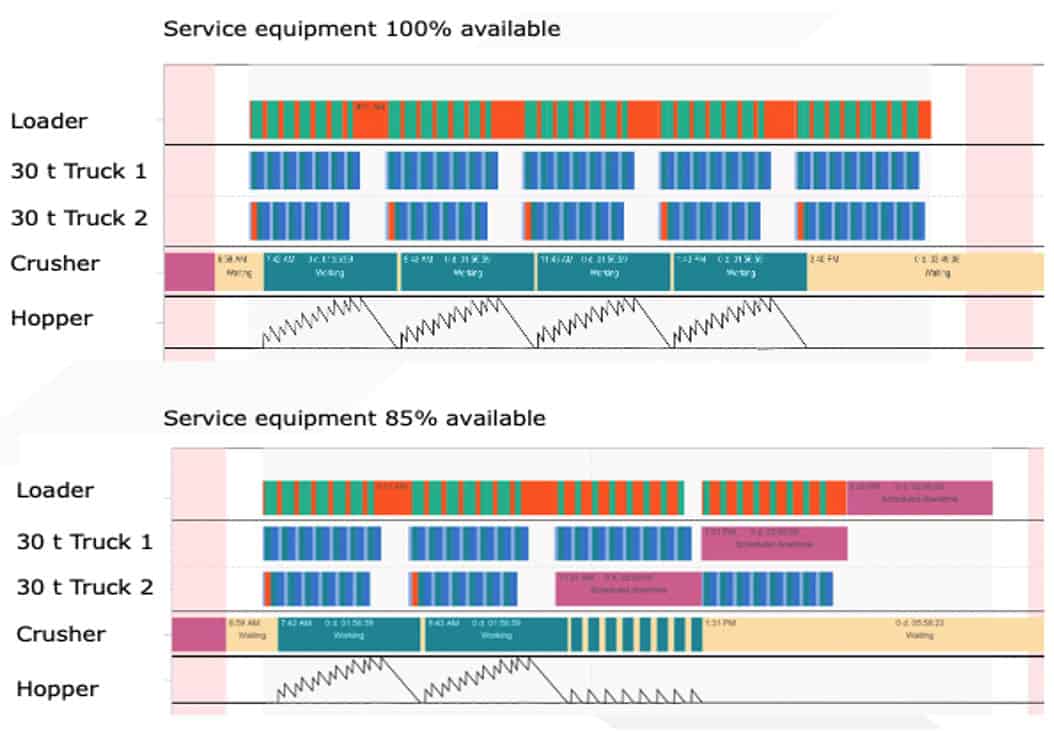
Fleet Composition and Allocation
During the pre-production years at South Crofty, fleet allocation emerged as a critical factor due to limited level connectivity, and the unavailability of ore passes. In the initial year the simulation revealed that the original single-loader plan was inadequate to meet development targets, as all material had to be moved by LHDs without truck support due to height restrictions and incomplete infrastructure. Loaders faced increased competition for access and had to perform long internal hauls to temporary ore and waste storage areas, leading to significant delays.
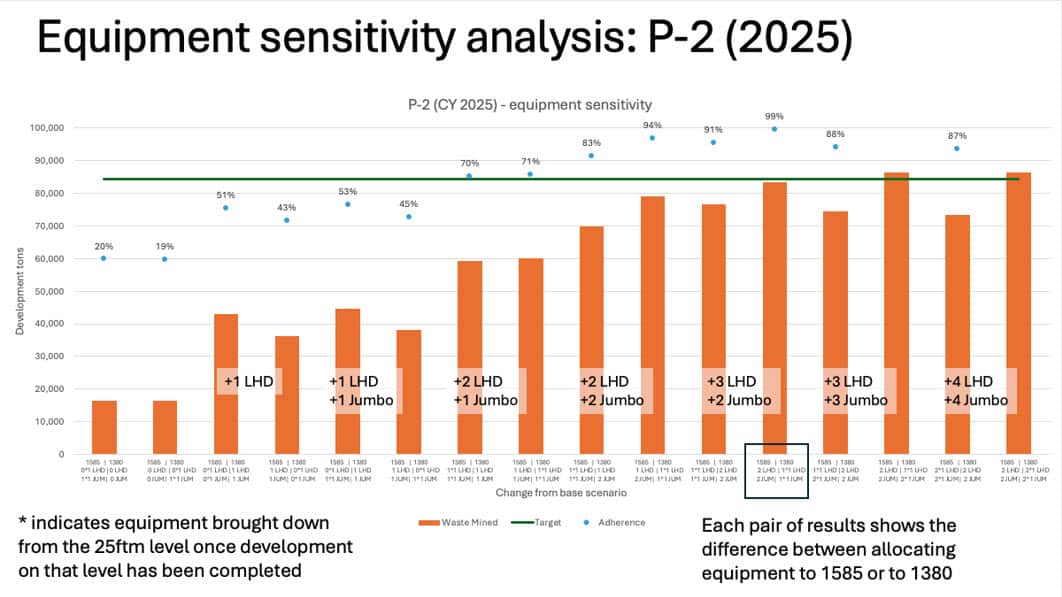
Equipment sensitivity testing showed that at least three additional LHDs were needed, alongside multiple jumbos, to approach feasibility. By the next year the plan improved, but production was still only achievable under specific equipment assignment strategies, particularly when LHDs were paired with trucks and allowed to dump into ore passes. The analysis confirmed that early-stage fleet competition and isolation, caused by unconnected levels, required both increased equipment and better coordination to avoid idle time and underperformance.
Benefits
Simulation uncovered critical bottlenecks:
- 3 additional loaders required in year 2 for waste transport
- 1 more loader needed in year 5 to avoid production delays
- Surface truck–loader–hopper system is insufficient for planned throughput. Usage of bin with automated chutes was recommended
The static plan did not capture idle time caused by equipment mismatches. MineTwin enabled level-specific equipment planning to overcome early connectivity limitations.
Clients
 Tomahee – a mining optimization specialist helping clients transform operations into best‑practice systems through deep value chain expertise and integrated planning support.
 Cornish Metals – a mineral exploration company focused on reopening the fully permitted South Crofty tin mine in Cornwall as a low-cost, high-grade underground operation.
Download a PDF of this case study: MineTwin South Crofty Case Study
Learn more about MineTwin.
Contact MOSIMTEC to learn more about how simulation modeling can help your organization.