
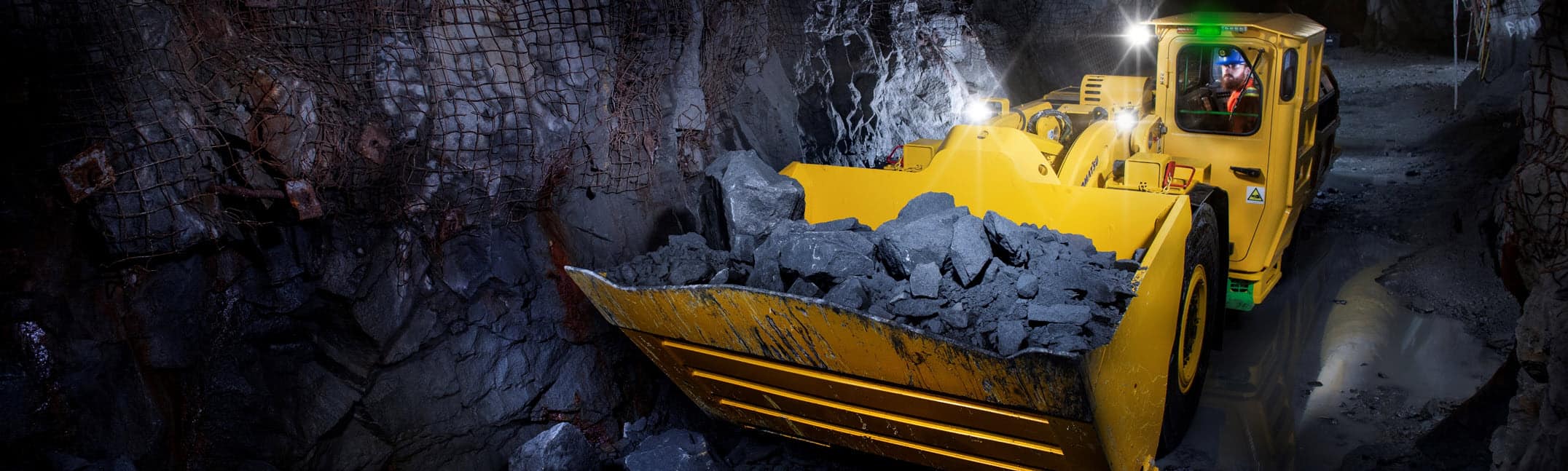
 An underground fluorite mine faced significant complexity due to unpredictable geology and a complicated haulage network. To support a production increase, the company needed clear answers to two key questions:
- Would the planned capacity upgrade of a shaft ensure sufficient mining and haulage throughput?
- How many additional trucks and loaders were required for the planned production growth?
After MineTwin provided reliable answers, the client continued using it to validate quarterly and annual plans, foresee bottlenecks, and guide equipment-purchase decisions.
Background
The client operates a large underground fluorite mine, characterized by complex production processes, variable geology, and shared use of critical equipment such as LHDs and mining trucks. The mine relies on multiple extraction methods, several transfer points, and two skip shafts, making the haulage system highly interdependent and sensitive to bottlenecks.
Because production performance depends non-linearly on equipment allocation and the movement of mining fronts, the mine required a more reliable way to assess operational constraints and plan for a future production increase.
Objectives
The project aimed to introduce a simulation-based decision-support tool capable of validating medium-term mine plans (1–12 months) and answering several critical production-increase questions, including:
- Whether improvements to one of the shafts’ availability would ensure the haulage system could support the first stage of production growth.
- How many additional mine trucks would be needed to meet the planned production targets.
- How changes in crew schedules would affect overall productivity.
- Whether constructing an additional skip shaft could reduce the truck fleet size by shortening haul distances.
A long-term goal was to establish a center of competence enabling the client to continuously apply simulation for strategic and mid-term planning.
Solution
We developed a MineTwin simulation model based on:
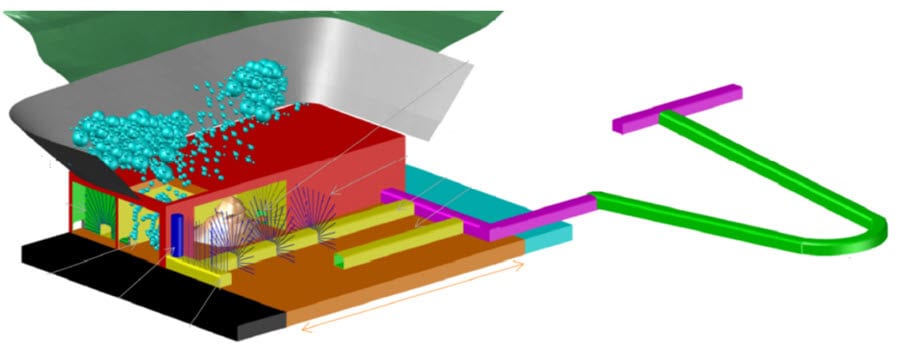
- Full mine layout, including stopes of 2 different mining methods, headings, muck bays, ore passes, and skip hoists.
- Equipment interactions for mucking, drilling, hauling operations.
- Geology unpredictability in the form of random variable distributions of drilling durations, fragmentation rates and blasted ore quantities.
We imported Vulcan designs and validated the simulation logic.
Determining Benefit of Additional Infrastructure
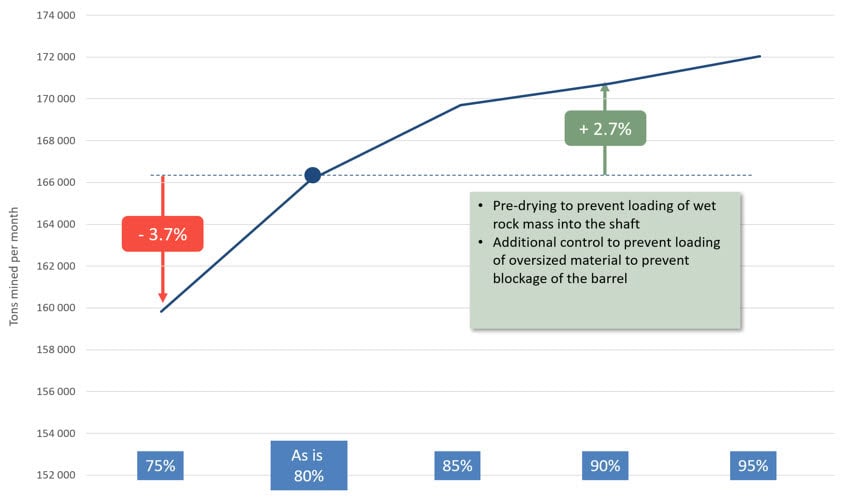
MineTwin simulations evaluated whether measures to increase shaft’s availability — from 80% to 95% — would effectively raise mine’s throughput. The model showed that at higher shaft availability levels, mine output could increase by up to 2.7%, confirming that the planned capacity upgrade was justified.
The model also assessed the effect of adding more mining trucks. Scenarios ranging from +1 to +5 trucks were tested, allowing the mine to determine the optimal fleet size required to support the planned production increase and avoid unnecessary capital expenditures.
Supporting Ongoing Planning
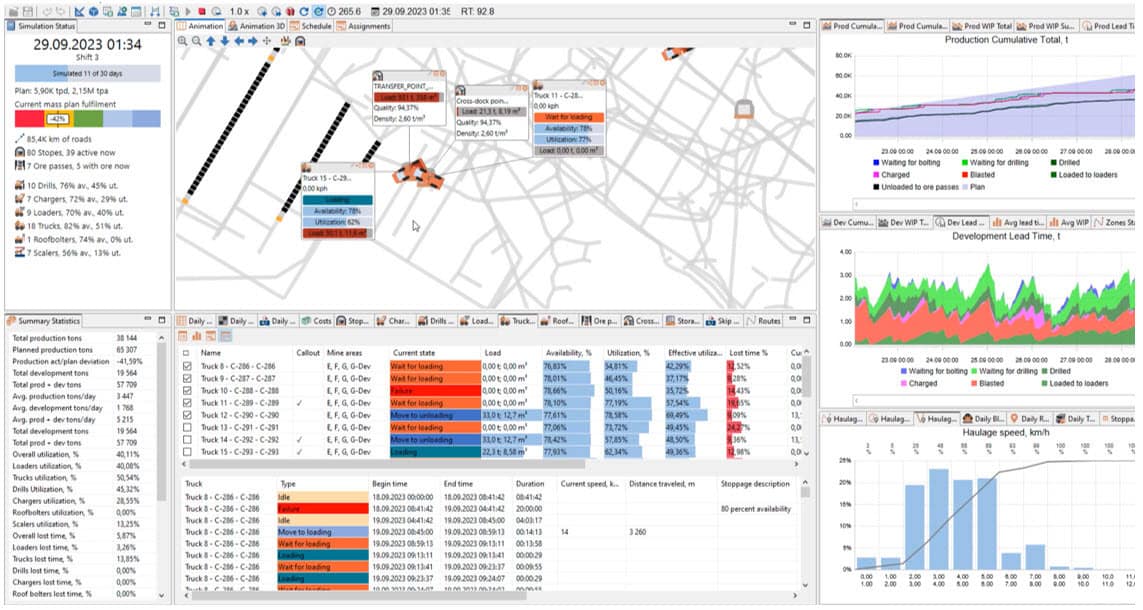
After receiving clear, data-driven answers to the strategic questions, the client expanded the use of MineTwin as a core tool for ongoing planning. The simulation model now supports:
- Validation of quarterly and annual production plans
- Early identification of bottlenecks across extraction, haulage, and hoisting
- Optimization of equipment fleets for both short- and long-term horizons
- More accurate decision-making and forecasting at all operational levels
The project was completed in four months, resulting in the creation of an internal competence center that enables the mining company to independently use MineTwin for continuous decision support.
Results
Simulation provided insights across all tested initiatives and:
- Improved annual planning accuracy by 10%
- Confirmed that the shaft capacity upgrade could deliver a 3% increase in mine throughput
- Determined the required number of loaders and trucks for the mine’s future state
Why MineTwin
MineTwin was selected because it provides a high-fidelity simulation of underground mining operations, capturing equipment interactions, haulage routes, delays, and the dynamic behavior of the mine. Compared with Excel or industry standard planning tools, MineTwin offered superior customization, accuracy, integration potential, and rapid simulation speed, allowing the model to reflect the unique conditions and constraints of this specific mine.
Download a PDF of this case study: MineTwin Fluorite Underground Case Study EN_MOSIMTEC
Learn more about MineTwin.
Contact MOSIMTEC to learn more about how simulation modeling can help your organization.