
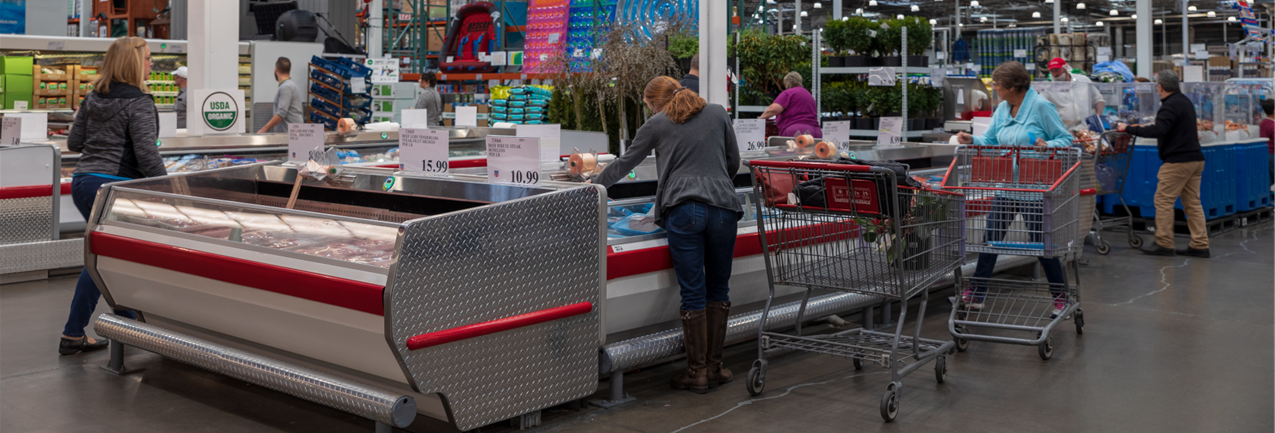
 The checkout and receipt verification process for a store can make or break a shopper’s final impression. The density of surrounding shoppers, queue times at the registers, and ease of flow through the register aisles and out the store exit all need to be designed cohesively for a positive experience.
An international warehouse club retail store wanted to improve pedestrian flow through their store front-ends by evaluating different layouts of checkout register formations and counts across different store archetypes.
This retail store worked with MOSIMTEC to develop an AnyLogic model that could simulate a store front-end with customer traffic for a variety of demand situations and layout alternatives. The modeling engagement helped determine an ideal layout and register count to reduce the overall register footprint while still prioritizing the customer experience.
Challenge
Warehouse club customers have a significant spread of basket sizes, checkout type preferences, and time spent per item. Customer arrival rates can also vary wildly across stores and within a single store on any given day. Register layout, use of self versus staffed registers, and total register counts should be individualized for each store’s needs.
This retailer was implementing technology advancements that affect customer shopping behavior. The retailed needed insights on how certain layouts would fair with this future customer behavior. A few pilot stores adopted these changes but more data was needed to quickly and accurately understand system behavior across the a wider variety of store types.
Solution
MOSIMTEC developed a flexible, AnyLogic simulation model to test various arrival patterns and volumes against different register arrangements and counts. The model allowed for multiple front-end layouts to be evaluated. The customers per group, cart sizes, and self versus staffed register preferences could all be varied in the model. The analysis was conducted with both historical data and anticipated future data profiles. 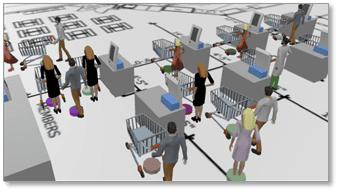
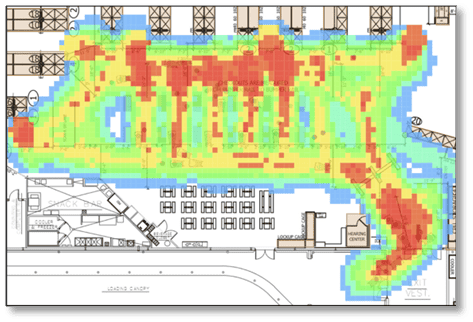
The simulation model considered detailed checkout selection behavior, along with overall pedestrian flows through the front end. Heat maps aided in identifying congested areas.
Benefits
With analysis from model runs and in-person visits, this retailer was able to visualize the effects of how register arrangements impacted register queues. Register queues in turn affected crowding and pedestrian flow for those stepping out of the warehouse aisles. Some of the early benefits of using simulation-based design were:
- Identifying the optimal register formation for most of the retailer’s front ends
- Eliminating proposed configurations that would have been costly to implement for little value gained
- Downsizing excess register counts
- Understanding ideal self versus staffed register ratios
- Providing a data-driven tool for individual stores to use and fit to their customer base

Download a PDF of this case study: RetailFrontEndPedModelCaseStudy
Contact MOSIMTEC to learn more about how simulation modeling can help your organization.