
A complex underground mining operation in North America, with multiple ore bodies, development areas, and shared infrastructure needed a way to evaluate different improvement opportunities. Traditional planning approaches, relying on static schedules and spreadsheets, struggled to account for:
- Dynamic equipment interactions
- Resource competition across levels
- Surface infrastructure constraints
Challenge
The mining operation was under pressure to improve throughput while keeping costs under control. Although several improvement initiatives had been identified, ranging from equipment changes to crew reallocation, the team lacked the time, resources, and capital to test each one in the real world. They needed a safe, risk-free way to evaluate these ideas, quantify their potential impact, and prioritize the most effective strategies due to limited budget and time. To achieve this, they partnered with MOSIMTEC to develop a simulation-based digital twin of the operation.
Objectives
- Evaluate improvement initiatives in a risk-free environment by simulating operational changes without disrupting real-world activities.
- Quantify the impact of proposed changes on throughput, efficiency, and cost to support data-driven decision-making.
- Prioritize initiatives based on ROI and feasibility, ensuring limited time and capital are focused on the most effective strategies.
Why MineTwin
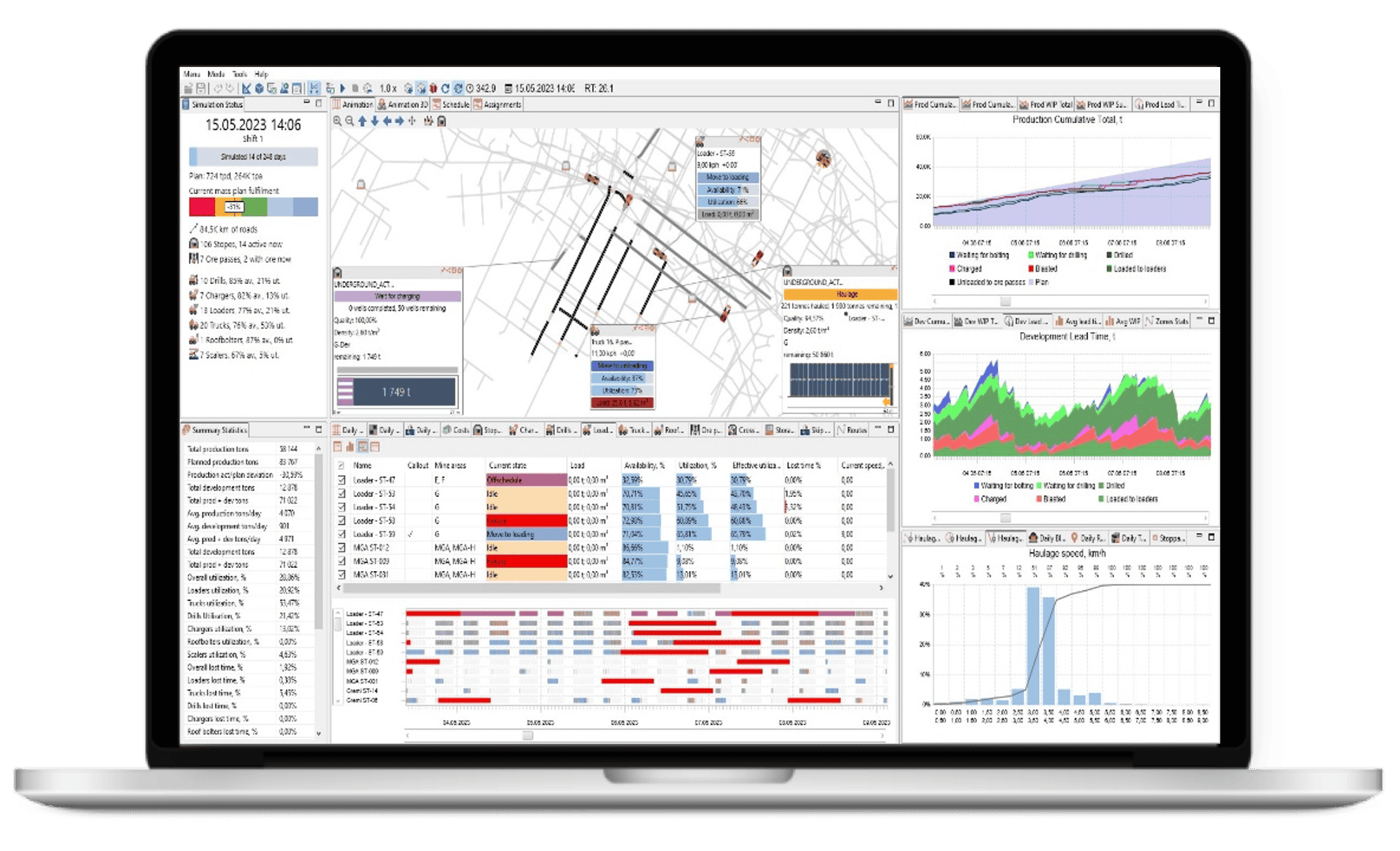
MineTwin is a simulation tool designed specifically for mining operations. It allows detailed simulation of truck–loader interactions, queuing, haulage delays, and stoppages.
It supports fast, flexible testing of fleet and scheduling scenarios, helping mine planners and top management make informed decisions based on realistic operational behavior.
Solution
We developed a MineTwin simulation model based on:
- Full mine layout, including stopes, headings, muck bays, ore passes, rail infrastructure, and surface logistics
- Equipment interactions for mucking, drilling, hauling, and mill feed operations
- Multiple ore production zones with dedicated crew and fleet
We imported Deswik designs and validated the simulation logic with mining personnel.
Analysis of Mining Cycle
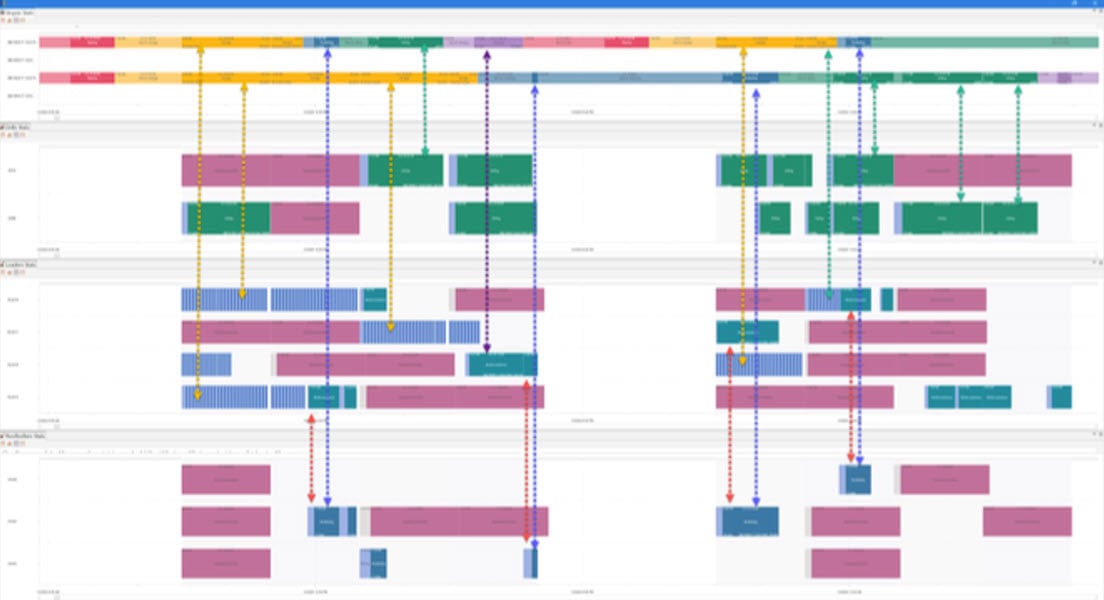
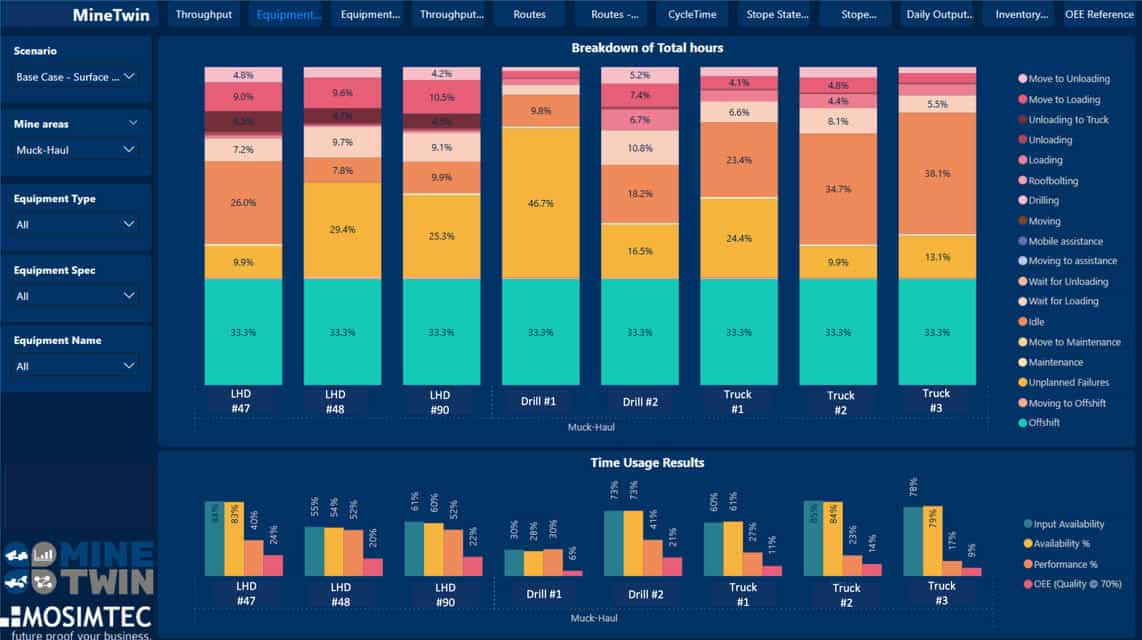
Using MineTwin’s reporting and Gantt chart visualizations, the team analyzed the full mining cycle to identify bottlenecks. A key finding was that drilling was the bottleneck during most of the simulated period. Unlike other equipment, drills could not move independently and required loaders (LHDs) and crew to be repositioned between headings, which makes static calculations to determine the exact bottleneck almost impossible.
The simulation revealed there were enough LHDs, but not enough drills to keep stopes ready. Scenario testing showed that the biggest gains came from adding both drills and crew, with crew availability delivering the highest overall impact.
Determining Benefit of Additional Infrastructure
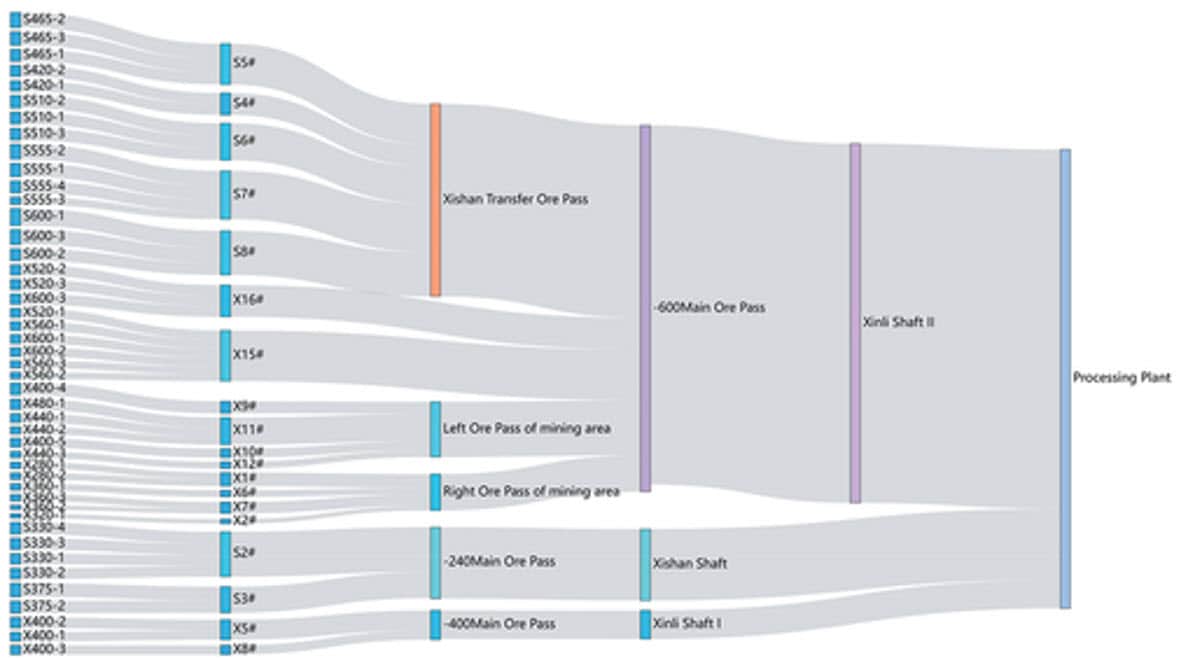
One of the major initiatives tested in the simulation was the addition of more ore passes throughout the underground mine. Operations had long believed that increasing the number of dumping points between levels would ease material flow, reduce wait times, and ultimately increase overall production throughput.
However, the MineTwin simulation revealed a surprising result: ore hauling was not the limiting factor in the system. The model showed a 13% gain in logistical efficiency, with total loaded travel distance decreasing, leading to a modest drop in fuel consumption – not higher throughput.
This counterintuitive insight proved critical. Without simulation, the team was prepared to invest heavily in new infrastructure, believing it was a key to unlocking capacity. By validating this through data, the operation avoided a multi-million-dollar capital expenditure and was able to redirect focus to changes that truly improved performance.
Benefits
Simulation provided answers and insights on all initiatives tested:
- Adding additional ore passes did not improve throughput, but yielded 13% efficiency gains (less travel, reduced fuel consumption)
- Additional crew in 3 of the production zones resulted in 20% increase of the mine’s throughput
- Drilling capacity is the bottleneck: + 1 Drill rig = +10% throughput
- Muck haul becomes constraint when mining both SLE and MCF
Download a PDF of this case study: MineTwin North America Underground Case Study
Learn more about MineTwin.
Contact MOSIMTEC to learn more about how simulation modeling can help your organization.