
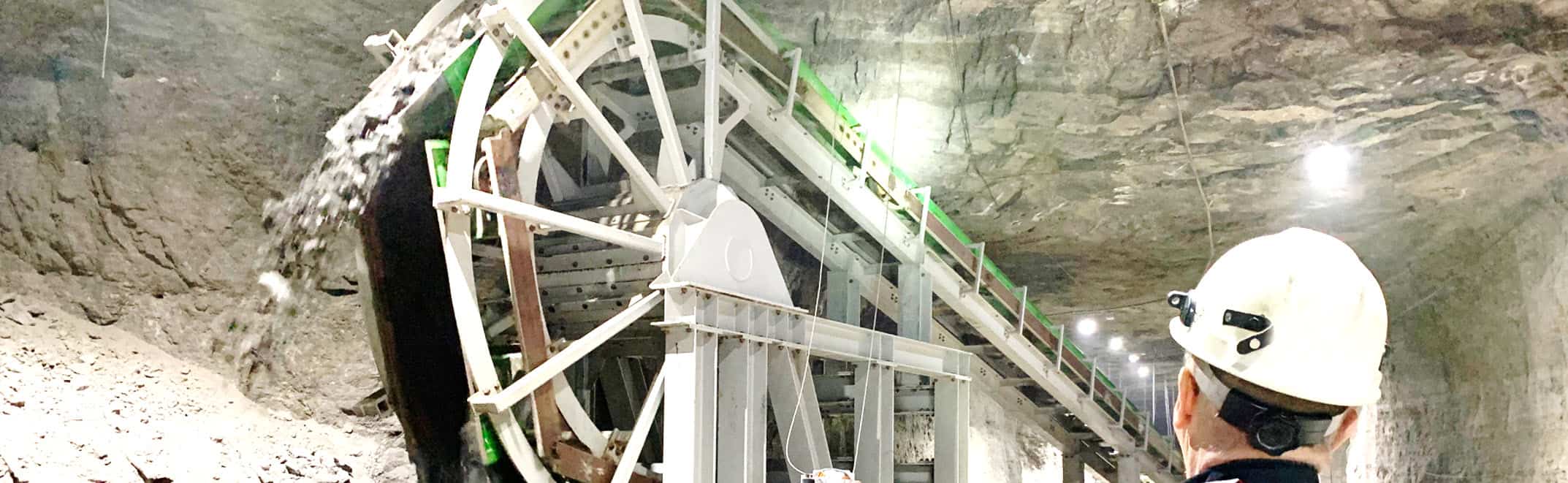
The objective of this project was to simulate and validate the technical design of a project implementing a flexible autonomous rail haulage system (Railveyor®).
Tasks included:
- Calculating mine productivity for various stages of life of mine using the Railveyor system
- Identifying bottlenecks for different haulage configurations (dead-end, looped, etc.)
- Determining the optimal number and technical parameters of Railveyor trains
- Evaluating overall mining efficiency after implementation of Railveyor system
Project Context
The project involved modeling the mine infrastructure and Railveyor operations for multiple stages of life of mine.
Each stage included:
- Validation of design assumptions and fleet sizing based on productivity and availability criteria
- Simulation of Railveyor movement considering:
- Haulage speed on mainlines
- Speed during loading/unloading
- Train and wagon parameters
- Individual route layouts
- Interaction at passing points
- Speed reduction on curves and acceleration on straight sections
- Scenario-based study using simulation modeling and interpretation of results
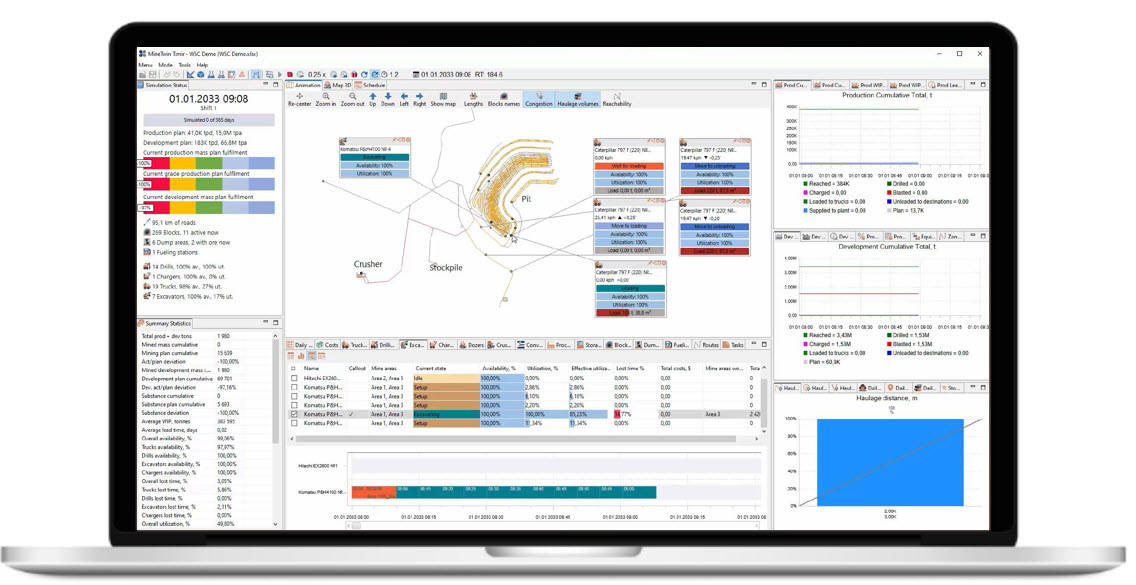
- Detailed performance analysis with 2D and 3D visualization of Railveyor operation
Additionally:
MineTwin was integrated with the mine’s geological information system to enable automated scenario generation.
Key Questions
Simulation in MineTwin was aimed to answer:
- Are the design assumptions valid?
- What Railveyor fleet is optimal for achieving production targets?
- How many trains are needed at each stage of mine development?
- Is the overall haulage system capacity sufficient?
Solution
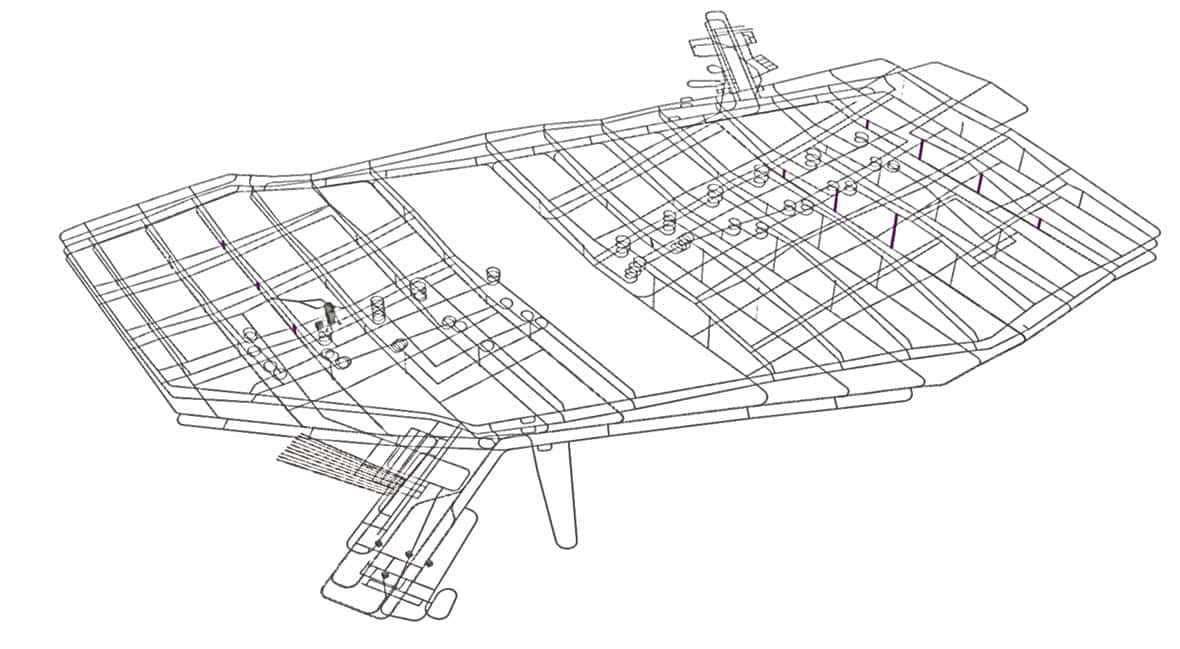
Simulation scenarios were created for key stages of life of mine.
The model replicated Railveyor dispatching and scheduling logic along multiple routes, accounting for:
- Train interactions at passing loops
- Movement in loading and unloading areas
- Different routing schemes
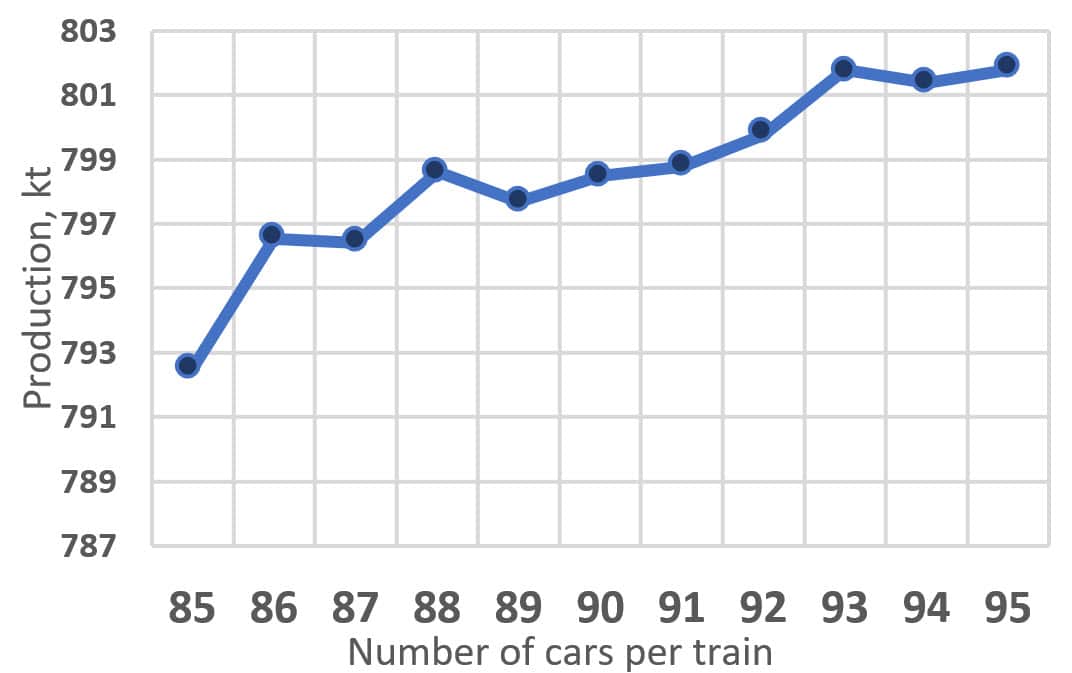
Optimization studies determined the best capacity and fleet size for Railveyor trains.
Integration with the mine’s geological information system enabled automated scenario generation.
Study Mode
MineTwin’s “Study” mode and fleet analysis helped identify operational patterns for production improvement, such as automatic calculation of Railveyor train parameters and their impact on productivity.
Impact of Railveyor Train’s Length on Annual Mine Production
Results
- The initial Railveyor layout was refined. At later stages of mine development, an additional branch track was required for bypassing.
- Technical parameters of the Railveyor trains were simulated and verified to support future design justification.
Why MineTwin
Designed specifically for mining:
Unlike generic simulation tools, it accurately reproduces operations of both open-pit and underground mines.
It models detailed equipment interactions within cyclic or continuous haulage systems, capturing nonlinear constraints and dependencies invisible to Excel or linear programming.
Bridging strategic planning and operational control:
MineTwin verifies plan feasibility considering equipment availability, geological conditions, and operational constraints.
Scalable and adaptable:
It enables creation of an internal competence center to develop models for multiple mines on a unified platform.
MineTwin is flexible enough to adapt to different mine layouts and process configurations.
After implementation, internal teams can independently run scenario analyses, optimize fleet configurations, and evaluate operational changes — supporting continuous improvement and well-grounded investment decisions.
Download a PDF of this case study: MineTwin RailVeyor Case Study EN_MOSIMTEC
Learn more about MineTwin.
Contact MOSIMTEC to learn more about how simulation modeling can help your organization.